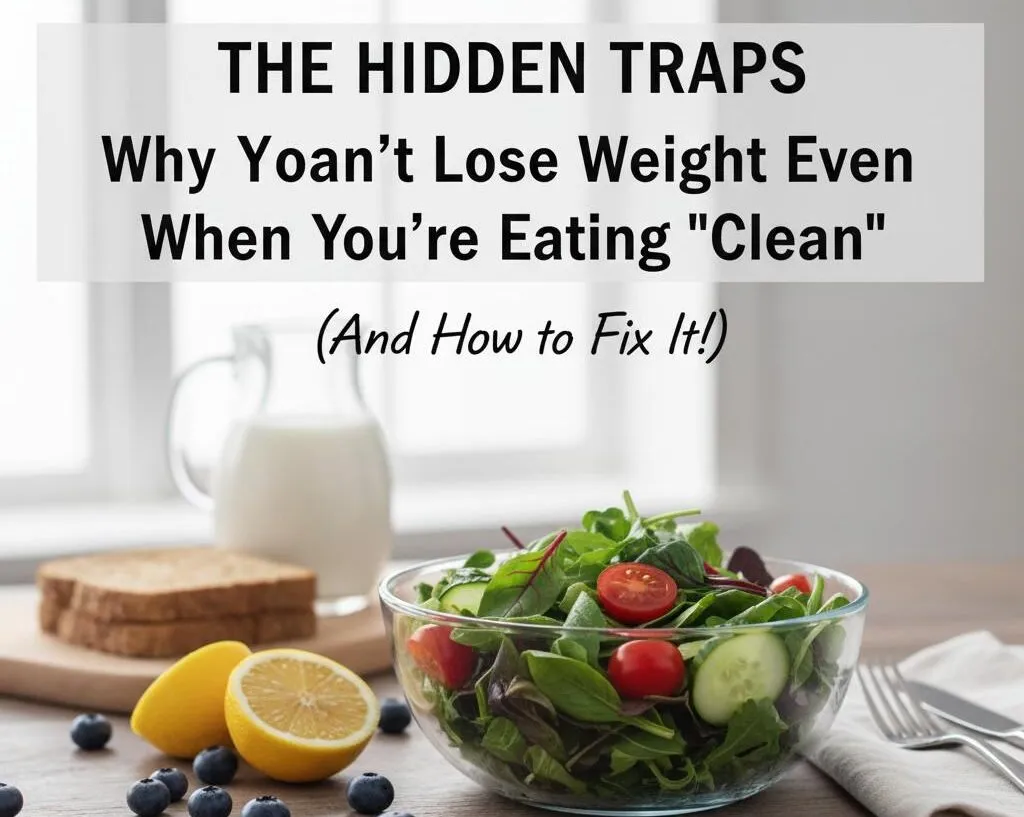
Stuck on a fat loss plateau despite eating clean? Discover the hidden high-calorie traps in healthy foods (nuts, oils, avocado) and fix your metabolism now.
Why “Clean Eating” Fails: The Real Reason You Can’t Lose Weight
You’re meticulously choosing whole foods. Salads are your lunch staple, you’ve swapped sugary sodas for water, and processed snacks are a distant memory. Yet, the scale won’t budge. In fact, sometimes it feels like it’s mocking your efforts.
If you’re eating “clean” but still stuck on a weight loss plateau, you’re not alone. The concept of “clean eating” is fantastic for health, but it often glosses over critical details that can unintentionally sabotage your fat loss goals.
Let’s uncover the hidden traps within seemingly healthy diets and equip you with the knowledge to finally break through.
Frequently Asked Questions (FAQ)
Q1: If I eat clean, do I really still need to count calories or track portions?
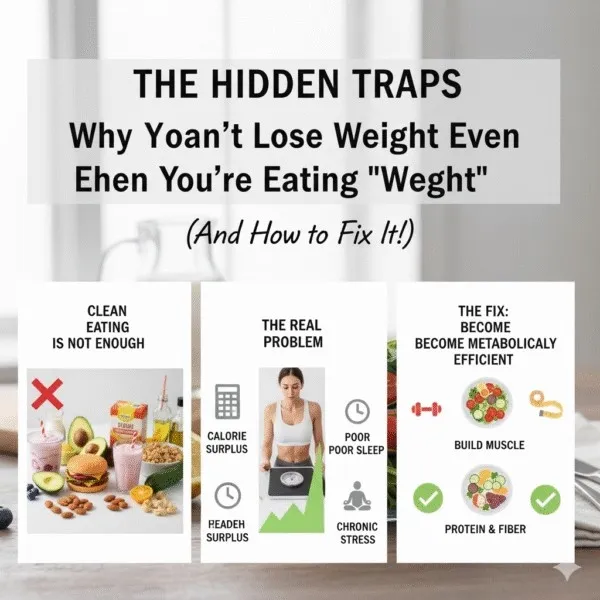
A: While the quality of “clean” foods is the most important factor for health, yes, you often still need to be mindful of quantity, or calorie density, for weight loss. This is the core issue of the plateau. Clean foods like nuts, avocados, olive oil, and brown rice are incredibly nutritious but are also calorie-dense. To lose weight, you must be in a caloric deficit, and it’s easy to accidentally exceed that deficit by over-consuming healthy fats or grains without tracking portions.
Q2: Why did I lose weight easily at first, but now I’m completely stuck?
A: This is known as a weight loss plateau and it’s a completely normal biological response.
- Metabolic Adaptation: As you lose weight, your body requires fewer calories to function. Your Resting Energy Expenditure (REE) decreases, meaning the deficit you created initially is no longer a deficit at your new, lighter weight.
- Water Weight Loss Stops: The initial rapid loss was mostly water weight from reduced inflammation and stored glycogen. That phase is over.
- Unconscious Creep: Small, extra “clean” portions (like a few too many almonds or a drizzle of extra dressing) start adding up again, silently pushing you out of a deficit.
Q3: Are “healthy fats” like olive oil and avocado bad for weight loss?
A: No, they are absolutely crucial for health! They are not “bad,” but they are calorie-dense.
- Olive Oil: One tablespoon is approximately 120 calories. A seemingly small “drizzle” on a salad can easily be 3-4 servings, adding 360-480 calories without noticing.
- Avocado & Nuts: These are full of satiating fiber and healthy fats, but a large avocado can be 300+ calories, and a standard handful of almonds can be 170 calories.
The key is to portion them accurately (use measuring spoons for oils and small containers for nuts) to reap the benefits without derailing your deficit.
Q4: I feel like I’m eating enough protein. How can I be sure?
A: Many people underestimate their protein needs, especially when switching to a “cleaner” diet that focuses heavily on plants. Aim for a high-protein source at every single meal (3-4 times a day). A good target is approximately 0.7 to 1.0 grams of protein per pound of target body weight. If you’re consistently eating less than 100 grams of protein per day, increasing this can be the single most effective way to boost satiety and preserve muscle mass.
- 7 Doctor-Approved Ways to Reduce Visceral Fat
 Learn how to lose dangerous visceral fat with this expert-backed, 7-step plan. Discover key dietary swaps, the best exercises (HIIT), and stress-reduction tips to shrink your waistline. How to Lose…
 - Blog 4Lorem ipsum dolor sit amet consectetur adipiscing elit, sed do eiusmod.
- 7 Simple Habits to Melt Away Dangerous Visceral Fat Fastthe secrets to reducing harmful visceral fat with 7 simple, expert-approved lifestyle changes. Learn how to optimize your sleep, diet, and exercise for a healthier middle. Visceral fat—the deeply stored…
- Blog 2Lorem ipsum dolor sit amet consectetur adipiscing elit, sed do eiusmod.
- Blog 1Lorem ipsum dolor sit amet consectetur adipiscing elit, sed do eiusmod.