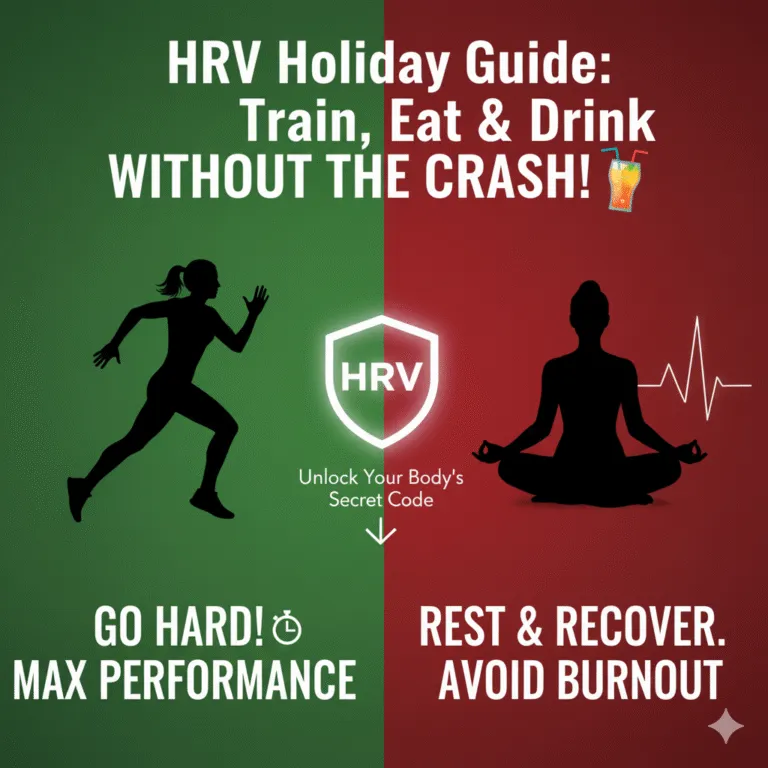
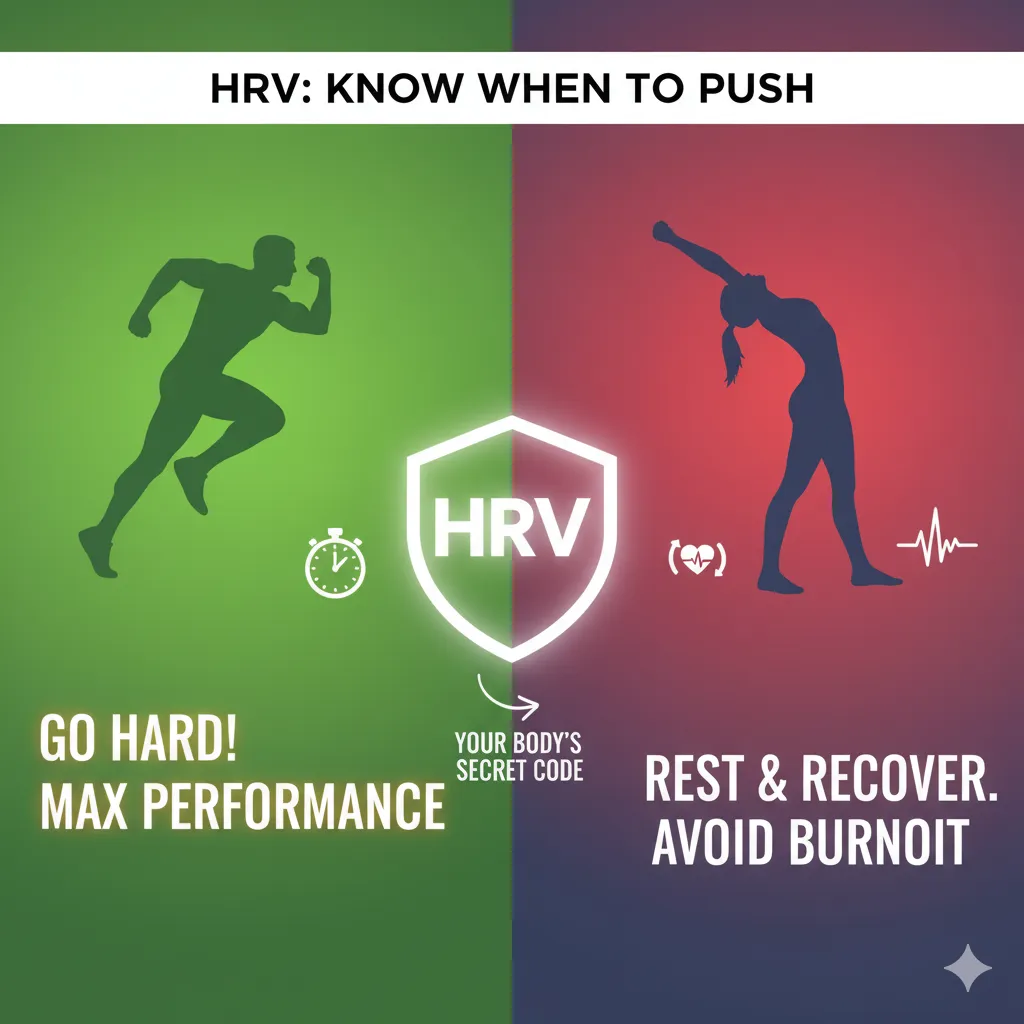
Unlock peak performance! Learn how Heart Rate Variability (HRV) reveals your body’s recovery state so you know when to push hard, when to recover, and how to avoid burnout.
Your Secret Weapon: How to Use HRV to Master Your Workouts (No More Guesswork!)
Tired of feeling burned out? Ever wonder if today is a “go hard” day or a “take it easy” day? What if your own heart could tell you?
Welcome to the world of Heart Rate Variability (HRV). This isn’t just a number on your watch; it’s a direct line to your nervous system, revealing your hidden recovery status and readiness to perform. Stop guessing, start optimizing.
What Exactly Is Heart Rate Variability (HRV)?
Simply put, HRV measures the tiny, millisecond variations in time between each of your heartbeats. It’s not your heart rate, but rather the pattern of its rhythm. A higher, more varied pattern typically indicates a healthy, adaptive nervous system – one that’s ready for action. A lower, more rigid pattern suggests stress or fatigue.
Why does this matter? Your nervous system has two main branches:
- Parasympathetic (PNS): The “rest and digest” mode. Higher PNS activity often means higher HRV – you’re recovering.
- Sympathetic (SNS): The “fight or flight” mode. Higher SNS activity often means lower HRV – you’re stressed.
By tracking HRV, we peek into this balance, giving us unprecedented insight into your daily readiness.
Step 1: Discover Your Personal HRV Baseline (It’s All About YOU!)
This is the most critical step. Your HRV is as unique as your fingerprint. Comparing your score to an “average” online is meaningless. You need to understand your normal.
How to Establish Your Baseline:
- Consistency is King: Use a reliable HRV tracker (many smartwatches, rings, or dedicated apps can do this – we recommend [Link to a reputable HRV tracking app/device review or guide]).
- Morning Ritual: Measure your HRV every single morning, immediately after waking, before coffee, food, or exercise.
- Same Position: Always take the reading in the same position (e.g., lying down calmly in bed).
- Long-Term View: Don’t obsess over one day’s number. Track for at least 7-14 days to see your true average and typical range. This average is your “baseline.”
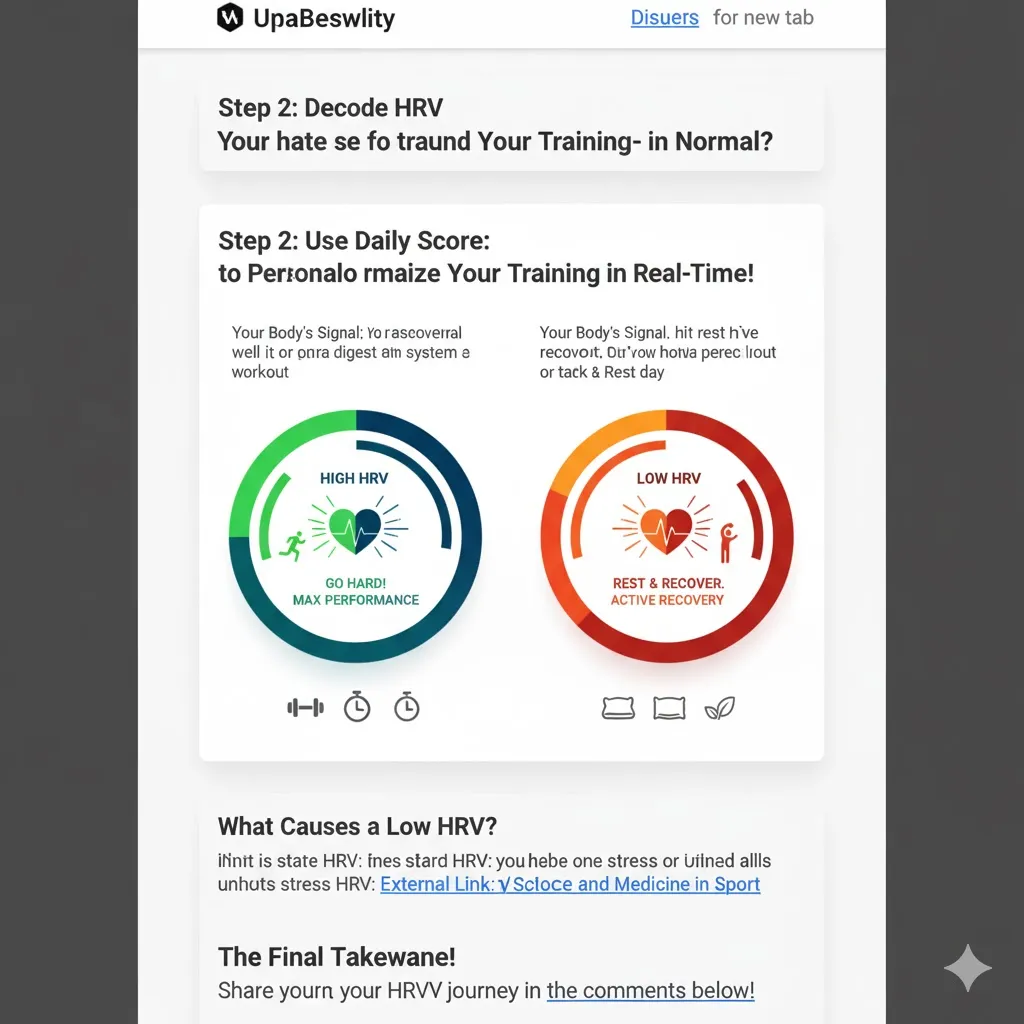
(Image analysis for the above placeholder: The image shows two circular graphics: “HIGH HRV” in green, with an icon of a person running, labeled “GO HARD! MAX PERFORMANCE.” The other is “LOW HRV” in orange, with a heartbeat icon, labeled “REST & RECOVER, ACTIVE RECOVERY.” This visually reinforces the core concept.)
Step 2: Deciphering Your Daily HRV Score
Once you know your baseline, interpreting your daily HRV is straightforward. It’s your real-time signal for optimal training.
| Your Daily HRV Relative to Baseline | Body’s State (Nervous System) | Your Workout Action! |
| Significantly Above Baseline | Green Light! Strong Parasympathetic dominance. Primed for action. | GO FOR IT! Push Your Limits. Your body is fully recovered and highly adaptive. This is your day for max effort, heavy lifts, intense HIIT, or skill work. Seize the opportunity for peak performance! |
| Within Your Normal Range | Yellow Light! Balanced Autonomic Nervous System. Coping well. | Train as Planned. Stick to your scheduled moderate-to-high intensity workout. Your body is ready to perform and adapt, but avoid overreaching. |
| Significantly Below Baseline | Red Light! Sympathetic dominance. Stressed & fatigued. | EASE UP! Rest or Active Recovery. Your body is working hard behind the scenes (fighting stress, illness, or recovering from a previous session). Pushing hard now risks injury, burnout, and hampers progress. Opt for gentle movement, stretching, or a full rest day. |
What Causes a Dip in Your HRV? (Beyond Just Exercise)
A drop in your HRV isn’t always about overtraining. Your body only has one stress bucket, and all forms of stress contribute to it. A low HRV is your nervous system’s early warning signal that the bucket is getting full.

(Image analysis for the above placeholder: A beautifully presented smoothie bowl with fresh fruit (kiwi, banana, raspberries, blueberries, passionfruit) and seeds, alongside a steaming cup of tea. This image subtly conveys elements that can influence HRV: healthy nutrition, hydration, and a calm, mindful start to the day, contrasting the stress factors discussed.)
Common culprits for a low HRV include:
- Poor Sleep: Quantity and quality matter. Late nights or interrupted sleep will show up here.
- Mental/Emotional Stress: Work deadlines, relationship issues, anxiety – your body doesn’t differentiate between physical and mental stress.
- Illness: Often, HRV drops before you even feel the first sniffle, giving you a crucial head start on recovery.
- Alcohol & Poor Nutrition: Late-night meals, excessive alcohol, or highly processed foods can significantly impact your recovery. (Learn more about nutrition’s role in recovery: [Link to an article on “Nutrition for Workout Recovery” on FitnessToday.us])
- Dehydration: Even mild dehydration stresses your system.
- Overtraining: Pushing too hard, too often, without adequate recovery.
The Power of the “Red Light” Day
A low HRV day doesn’t mean you’re lazy; it means you’re smart. Instead of trying to force a workout your body isn’t ready for (which often leads to poor performance, increased injury risk, and delayed recovery), use it as an opportunity:
- Prioritize Recovery: Focus on sleep, hydration, nutrient-dense foods, and stress-reduction techniques (meditation, deep breathing). (Check out our guide to effective stress management: [Link to “Mindfulness for Athletes” or “Stress Reduction Techniques” on FitnessToday.us])
- Active Recovery: Gentle yoga, light stretching, a leisurely walk, or foam rolling. These can promote blood flow without adding stress.
- Deload: If you see a consistent drop over several days, consider a full deload week from intense training.
Elevate Your Training: From Guesswork to Precision
HRV is a powerful biofeedback tool, empowering you to move beyond rigid schedules and truly listen to your body. By understanding your unique HRV patterns, you can optimize your training for peak performance, faster recovery, and long-term health.

Ready to start optimizing your fitness with HRV?
Share your HRV journey in the comments below! What changes have you noticed?