Master the holidays using HRV! Learn how to train, eat, and drink strategically to manage stress and avoid recovery crashes. Stop burnout and start the new year strong.
HRV Holiday Guide: Train, Eat & Drink Without Crashing Your Recovery
The holiday season—whether it’s a string of winter parties, a family vacation, or just extra-busy work weeks—is the ultimate test for your recovery.
Your body only has one stress bucket. During these periods, you’re filling it with late nights, emotional stress, travel chaos, rich food, and alcohol. You might think you’re resting because you took time off work, but your Heart Rate Variability (HRV) often tells a different, more stressed story.
Here is your proactive, data-driven guide to using your HRV to navigate the festive season without sacrificing your fitness goals or crashing into the new year burned out.
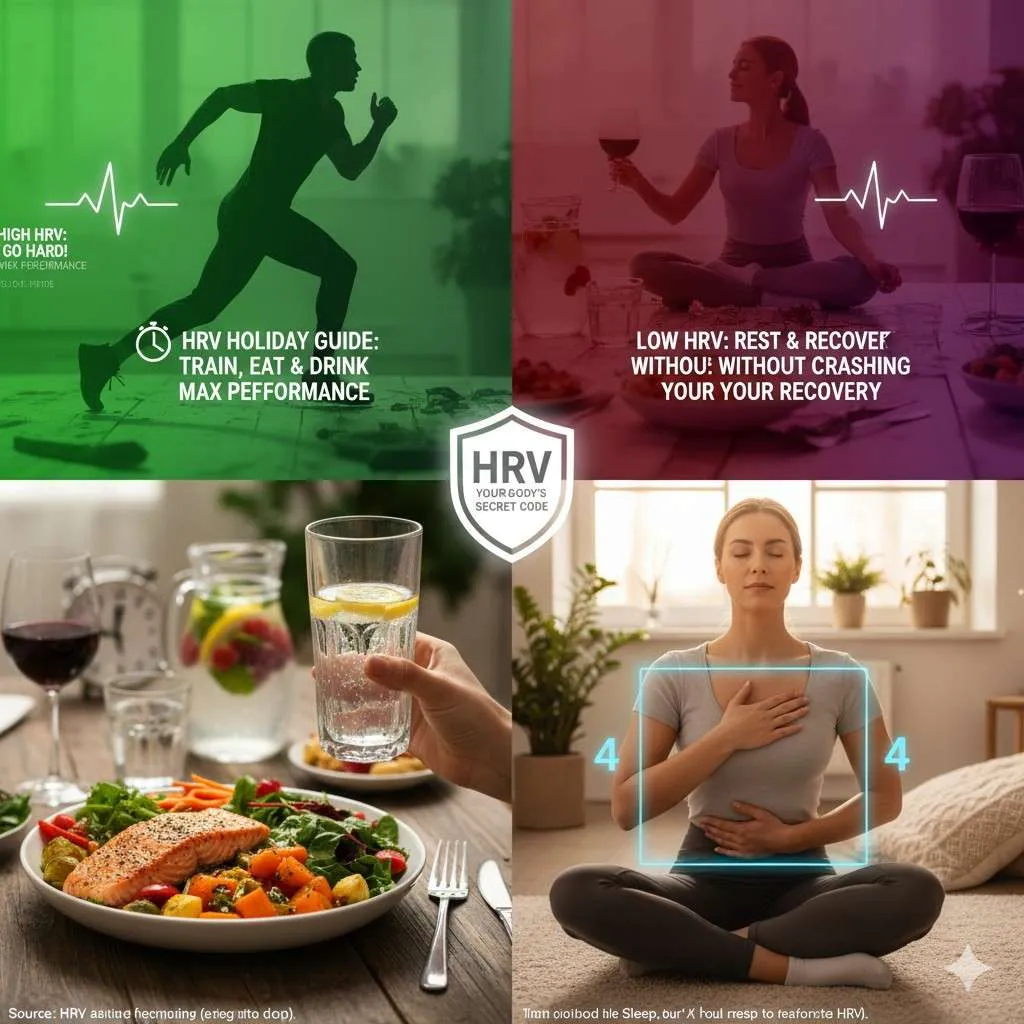
Image Analysis: This collage uses a split design. The top left quadrant is green with a running silhouette, indicating “High HRV: Go Hard!”. The top right is red with a person holding wine, symbolizing “Low HRV: Rest & Recover.” The bottom left features a healthy meal with a glass of water, emphasizing mindful eating and hydration. The bottom right shows a person meditating with numerical prompts for box breathing. The central “HRV: Your Body’s Secret Code” shield ties it all together. This visual is highly engaging, communicates the core message immediately, and highlights key strategies (exercise, mindfulness, nutrition, hydration).
🏋️ Train Smart: The “Stress Balance” Rule
Don’t abandon your training, but use your HRV baseline to make smart, strategic adjustments. The goal is simple: avoid layering high physical stress on top of already high life stress.
| Your Daily HRV Reading | Nervous System Status | Actionable Training Decision |
| High or Normal | Green Light! Fully recovered. | Push Hard. This is the day for your heavy lifting, maximum intensity, or long, intense endurance work. Seize the adaptation opportunity. |
| Low (Below 10% of Baseline) | Red Light. System under stress (Sympathetic Dominance). | Ease Up. Convert a hard session into Active Recovery. Opt for a light walk, stretching, or gentle yoga. Avoid intense training to prevent burnout or injury. |
Pro-Tip: Front-Load Your Intensity
If you know you have a stressful week of parties or family visits coming up, schedule your most intense workouts earlier in the week. This allows your nervous system a chance to absorb the training stress before the social and lifestyle stress hits.
🍽️ Eat Mindfully: The HRV and Digestion Connection
Your body dedicates huge amounts of energy to digestion. When you overload it, your Parasympathetic Nervous System (the “rest” side) gets hijacked, suppressing your essential nighttime recovery.
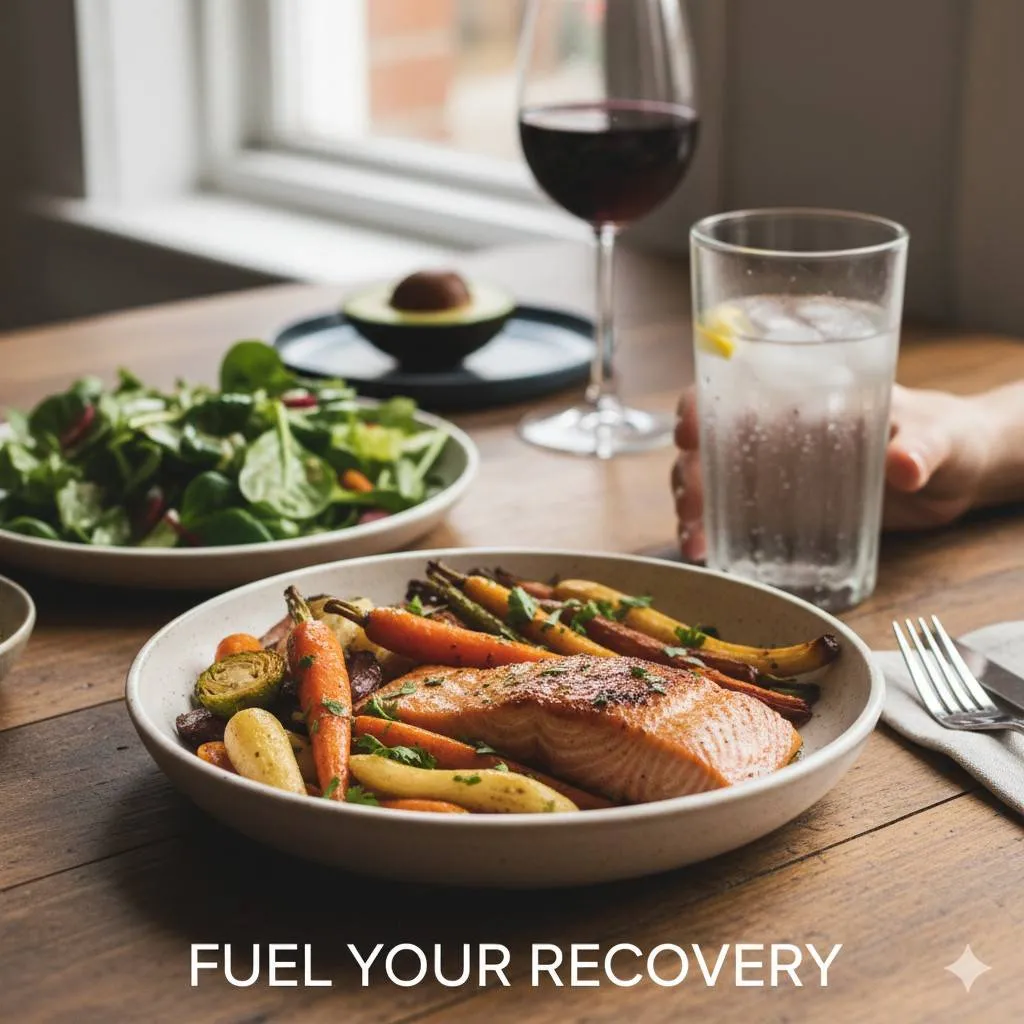
Image Analysis: A balanced, healthy meal featuring salmon, roasted vegetables, and a side salad. A glass of water is prominently held, emphasizing hydration. A glass of red wine is in the background, subtly reminding the reader of moderation. The text overlay “FUEL YOUR RECOVERY” directly reinforces the section’s theme.
- The 3-Hour Eating Rule: Finish your last large meal or significant snack at least three hours before bed. Eating a heavy meal close to sleep forces your body to keep the Sympathetic Nervous System (SNS) active to manage digestion, which directly lowers the quality of your overnight HRV reading.
- Focus on Fiber: Balance the inevitable holiday treats with high-fiber foods (salads, vegetables, whole grains). This supports gut health and prevents the massive blood sugar spikes and crashes that stress your system.
- Prioritize Omega-3s: Include sources of Omega-3 fatty acids (oily fish, walnuts, chia seeds). These anti-inflammatory fats are linked to improved HRV resilience and better cardiovascular health.
🥃 Drink Smart: Minimizing the Alcohol Crash
Nothing crushes a morning HRV reading like alcohol. Your body treats alcohol like a toxin, working tirelessly through the night to process it, which keeps your “fight or flight” system engaged.
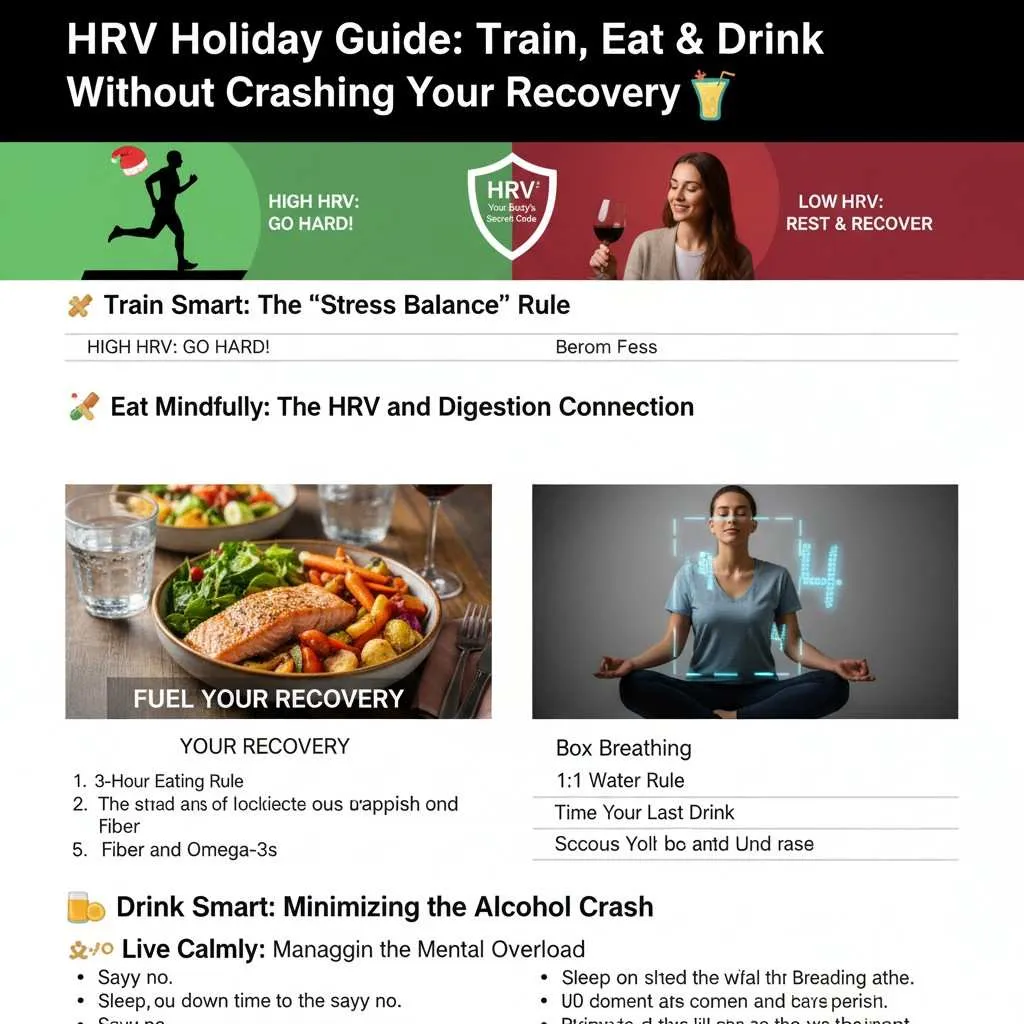
Image Analysis: This image is a content block summarizing key points from the article. It features the overall article title at the top, followed by subheadings for “Train Smart,” “Eat Mindfully,” “Drink Smart,” and “Live Calmly.” Within these sections, it incorporates mini versions of the previous images (the green/red HRV graphic, the healthy meal, and the meditating person) alongside bullet points of the advice. This acts as a visually appealing and scannable summary, reinforcing the main takeaways.
| Drink Strategy | Recovery Benefit |
| The 1:1 Water Rule | For every alcoholic drink, follow it immediately with a full glass of water. This moderates intake and fiercely fights dehydration, a major HRV depressor. |
| Time Your Last Drink | Aim to finish your last drink at least four hours before you plan to sleep. This gives your liver a crucial head start on processing the ethanol before your deep sleep cycles begin. |
| Choose Wisely | Avoid high-sugar mixers and sugary cocktails. High sugar exacerbates the HRV drop by adding a blood sugar spike to the metabolic stress. Opt for clear spirits with soda water or dry wine in moderation. |
🧘♂️ Live Calmly: Managing the Mental Overload
The biggest HRV killer during busy periods is usually not the gym—it’s the mental load: travel logistics, social obligations, and family dynamics.

.